Char-Griller Grills & Smokers Review
The working-person's grill brand: honest steel at half the money, with the understanding that you'll do a careful assembly, manage rust like an adult, and get cooking performance the premium names can't beat by anything like their price gap.
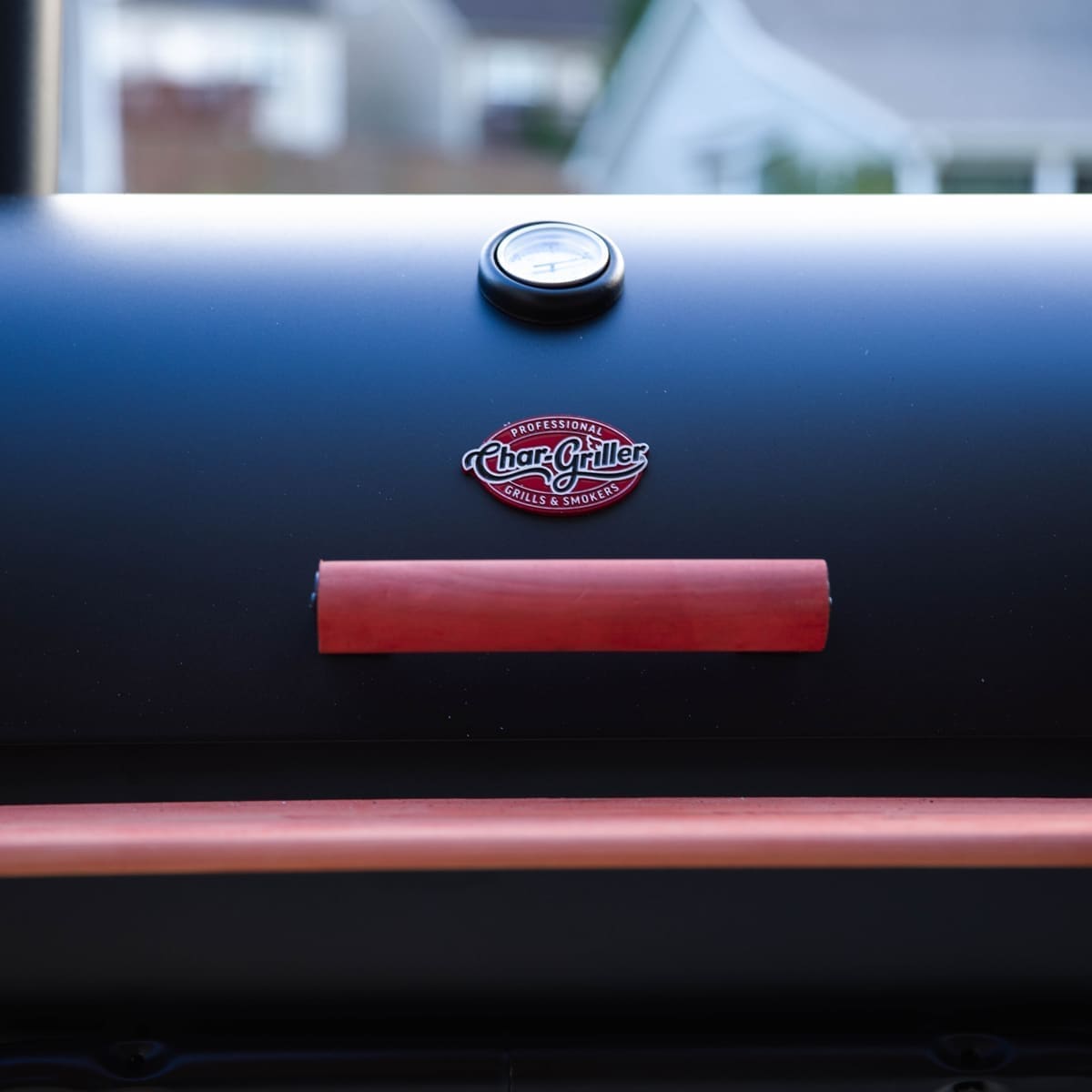
- Type
- Charcoal grills, kamados and offset smokers
- Positioning
- Budget-to-mid value brand
- Care reality
- Cover it, season it, expect to maintain it
Reasons to buy
- Serious cooking ability per dollar — the value case is real, not marketing
- The kamado line delivers ceramic-style cooking in insulated steel at a fraction of ceramic prices
- Repairable, basic construction — parts you can actually replace
- Wide range from starter barrel grills to proper offset smokers
Reasons to avoid
- Assembly is long, and how well you do it affects how well it seals
- Thinner steel on entry models means rust wins eventually without care
- Fit-and-finish gaps: expect to tighten, seal and tinker
- Temperature control demands more attention than set-and-forget pellet rigs
Grill pricing has quietly gone the way of wristwatches: the premium tier now sells identity as much as hardware, and the gap between what a status grill costs and what cooking dinner requires has never been wider. Char-Griller lives in that gap. It is unapologetically a value brand — sold at big-box stores, built to a price, and cooking, in practiced hands, far above its station.
The line's reputation rests heaviest on its insulated-steel kamado. Traditional ceramic kamados are magnificent and priced like furniture; Char-Griller's steel take on the format holds heat well enough to do the same low-and-slow cooking and the same screaming-hot searing for a fraction of the outlay. It gives up some of the ceramic's thermal mass and all of its status, and for a cook who cares about brisket rather than badge, that trade is the best deal in outdoor cooking.
Now the tax you pay instead of money. First, the assembly: these arrive as long afternoons in a box, and the care you take squaring panels and seating gaskets literally determines how well your grill controls airflow. Second, the steel: entry-level models use thinner sheet than the heavyweights, which means rust is not a possibility but a schedule — a covered grill with oiled grates lasts years; a neglected one goes to the curb embarrassingly fast. Third, the finish: expect small gaps, a lid that wants adjusting, a thermometer worth replacing. None of this is a scandal at the price. All of it is the price.
Who should buy one: the learner who wants to find out if smoking meat is their hobby before spending premium-tier money, the practical cook who'd rather master fire than finance equipment, anyone who reads 'requires maintenance' as normal ownership rather than a defect. Who shouldn't: the set-and-forget cook — a pellet grill suits that temperament better — and anyone who leaves tools in the rain. The steel will find you out.
Assembly is where most of the one-star reviews in this tier come from, and it is worth going in prepared rather than surprised. Budget a long afternoon and a second pair of hands, lay every part out and count it against the manifest before starting, and expect at least one hole that needs persuading into alignment. Leave every bolt finger-tight until the frame is fully assembled and only then work around tightening — the single most common cause of a wobbly grill is bolting each stage down hard as you go. None of this is unique to the brand; it is the reality of flat-packed steel at this price, and the people who enjoy their grill are the ones who expected it.
The maintenance that actually determines lifespan is unglamorous and mostly free. Keep the cooking grates oiled and the firebox clear of ash, because ash holds moisture against steel and that is where rust starts. Get a cover, and lift it off after rain rather than leaving damp trapped underneath — a badly used cover does more harm than none. And on charcoal models, check that the ash pan slides and seals properly, since a warped or ill-fitting pan is both an airflow problem and the thing that eventually rusts through first.
We rate it where the value lands: a four for what it does per dollar, minus the fraction for the corners you sand off yourself. Nobody regrets a Char-Griller for what it cost. The regrets come from expecting a premium grill — or treating it like one, which, ironically, means not maintaining it at all.
How we tested
The Char-Griller Grills & Smokers was scored against the same written rubric we apply to every Grills & Outdoor Cooking product — real-world performance, build quality, ease of use, upkeep and value. Full protocol on our How We Test page.